The trap in the middle of every bulk shelf
Every catalogue of this kind carries the same quiet assumption: that a bigger box is a better deal. Most of the time it is. Some of the time it is not, and the times it is not are almost never signposted, because the sticker price of the bigger box is genuinely lower per unit of nothing in particular.
We make 988 lines across 17 departments, and 888 of them state a count. Pack sizes run from a single tool up to 2006 pieces in one box. Between those two extremes sits every buying mistake anybody makes with supplies: the pack that was cheaper per piece and wrong for the room, and the pack that looked expensive and was the right size.
The arithmetic is not hard. It is just tedious enough that people skip it in a hurry, so every Honoson card prints the per-piece figure next to the price rather than leaving it as an exercise.
This guide is the long version of that figure: how to compute it, when to distrust it, and what the range itself says about where the real savings sit.
Who ends up buying this way
Four kinds of buyer keep this sort of catalogue in business, and they make different mistakes.
- The school. Buys once a term against a budget that does not roll over, which pushes towards the biggest pack in August and a cupboard nobody can shut by October. The failure mode is space, not money.
- The workshop. Buys consumables continuously and tools rarely. The failure mode is buying the cheap version of a tool that gets used daily, then buying it again.
- The party or event. Buys once, for a known headcount, and never needs the item again. The failure mode is the pack of seventy-two for a party of twenty, bought because the per-piece figure looked good.
- The small business. Price tags, seals, badge reels, bags. Consumption is genuinely continuous, which is the one case where the enormous pack is right and the small one is a false economy.
- Bought by the box because it runs out: favours, fasteners, tags, bags.
- The per-piece figure is the right question here, and a bigger pack usually wins it.
- The failure is space, not money: a count that outlives the room it was bought for.
- Bought once and used until it wears out, so the per-piece figure says nothing.
- The right question is what the joint and the finish are made of.
- The failure is buying the cheap one twice.
Every rule below is really a way of asking which of those four you are on this particular order, because the answer changes what the right pack size is.
The arithmetic, done once
Take the price, divide by the number in the box, round up to the nearest cent. Rounding up rather than down matters: a figure rounded down is a figure that flatters whoever wrote it, and the difference across a 200-piece pack is real money.
Worked through on this range, the spread between departments is wider than most buyers expect.
| Department | Multi-packs | Cheapest per piece | Dearest per piece |
|---|---|---|---|
| Badges & Lanyards | 47 | $0.06 | $2.25 |
| Seasonal | 48 | $0.02 | $7.60 |
| Party & Favours | 100 | $0.03 | $8.00 |
| Classroom & Teacher | 93 | $0.05 | $7.50 |
| Stationery & Paper | 100 | under 1¢ | $29.50 |
| Gift Packaging | 18 | $0.30 | $5.00 |
| Craft & Modelling | 144 | $0.04 | $16.67 |
| Hand Tools | 84 | $0.02 | $16.50 |
| Home Repair & Lighting | 50 | $0.17 | $12.50 |
| Garden & Outdoor | 20 | $0.75 | $18.50 |
| Kitchen & Bar | 33 | $0.12 | $18.00 |
| Beauty Tools | 33 | $0.10 | $5.00 |
| First Aid & Protection | 19 | $0.06 | $12.50 |
| Sports & Swim | 29 | $0.20 | $4.50 |
| Retail & Display | 17 | under 1¢ | $9.18 |
| Home & Decor | 20 | $0.03 | $4.50 |
| More Supplies | 26 | $0.03 | $7.00 |
Two things fall out of that table. The first is that the cheapest per-piece figures cluster in the departments where the item is small, light and consumable: favours, fasteners, stationery. The second is that the dearest per-piece figures are not a scandal. They are tools, and a tool is not a consumable.
The distinction matters more than any single number. A per-piece figure is a fair way to compare two packs of the same thing. It is a bad way to compare a pack of badge reels with a pair of pliers, because one is stock and the other is equipment. Ask what the item is before you ask what it costs per unit.
- 1. Take the shelf priceThe number on the card, before any thinking about counts.
- 2. Divide by the count in the boxNot by the count you need. The box states what it holds.
- 3. Round the cent up, not downRounded down it flatters whoever wrote the label: across a 2006 piece pack that is real money.
There is a second trap inside the arithmetic itself. Two packs of the same nominal count are not always the same product. A fifty-piece pack that includes five sizes is a different purchase from fifty of one size, and if only forty of the fifty are the size you need, the true per-piece figure runs a quarter higher than the label suggests. Where a mixed pack states its breakdown, the breakdown is the number worth dividing by.
Four times the bigger pack is the wrong answer
When the thing degrades. Adhesives, tapes and anything with a rubber component have a shelf life whether or not it is printed. A 500-piece pack of something that goes brittle in eighteen months is a 300-piece pack with a disposal problem attached.
- When the count exceeds the room. A class of thirty does not need 200 of anything that is not lost weekly. Buy for the room plus a sensible margin, not for the price break.
- When storage costs more than the saving. A shelf metre in a cupboard is not free, and the saving on a 2,000-piece pack is often smaller than the cost of the space it occupies for two years.
- When you have not tested the item. The single most expensive purchase in this catalogue is a large pack of something that turns out to be the wrong shape. Buy the small pack, use it, then buy the big one.
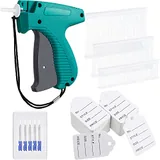
2006 Piece Clothing Price Tags
A useful test case: the count is high enough to make the per-piece figure meaningful, and low enough that a mistake costs a few dollars rather than a shelf.
$18.99 under 1¢ eachOne case where the count is not the only question
Most of this guide treats a pack as arithmetic. There is one department where it is not, and it is worth saying so here rather than leaving it to a different page.
Party favours and classroom rewards are bought in counts of fifty because that is what a room needs. The same counts put fifty small objects into a space that may also hold a toddler, and the United States has a specific rule about that rather than a general warning.
Certain children’s products that are or contain small parts, balloons, small balls, or marbles must be labeled to warn consumers not to buy them for children under a certain age.
the U.S. Consumer Product Safety Commission
The label is aimed at the buyer, not the user, which is exactly the person doing the bulk order. So for anything going into a mixed-age room, check the age marking before the per-piece figure, and read small parts in a big room before the order goes in.
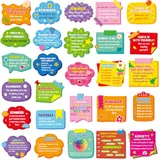
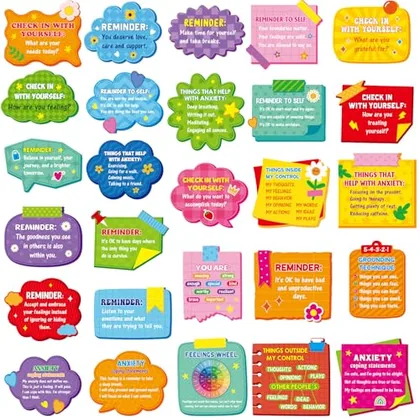
324 Piece Mental Health Stickers Motivational Positive Affirmation, Multicolour
Classroom counts are where bulk buying and age marking meet: the pack is sized for the room, and the marking is what tells you which room.
$13.99 $0.05 eachThe items that age, and the ones that do not
Cost per piece assumes every piece eventually gets used. That assumption fails quietly for anything with a chemical or elastic component.
| Ages badly | Why | Ages well |
|---|---|---|
| Adhesives, glue sticks | Set in the tube, lose tack in the joint | Steel fasteners |
| Elastic and rubber bands | Perish and snap, faster in warmth | Plastic clips and organisers |
| Batteries in lit party items | Self-discharge whether used or not | Paper, card and envelopes |
| Printed seasonal lines | A dated design is unsellable and unusable next year | Plain stationery |
| Anything with a self-adhesive backing | The backing yellows and the tack goes | Hand tools |
The practical rule: for anything in the left column, buy for the period you can actually consume it in, and treat the per-piece figure as a maximum rather than a target. For the right column, buy the big pack with a clear conscience.
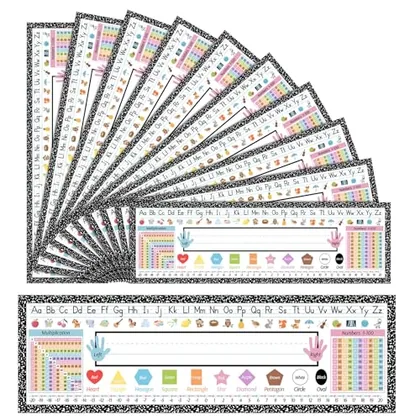
The room method: counting before you shop
The method that survives contact with a real budget is dull and works. Count the people, count the uses per person per period, multiply, add a margin for loss, then find the pack that covers it with the least waste.
| Setting | People | Typical use | Pack that fits |
|---|---|---|---|
| Primary classroom | 30 | One item each, replaced twice a year | 60 to 100 |
| Office floor | 40 | Badge reels issued once, replaced on loss | 50 |
| Birthday party | 20 | Two favours per guest | 48 |
| Model workshop | 1 | Sanding sticks, consumed per project | 20 to 30 |
| Small shop counter | 1 | Price tags, continuous | 1,000 and up |
Notice that the last row breaks the pattern deliberately. A shop counter is one of the few settings where the enormous pack is correct, because consumption is continuous and the item does not age.
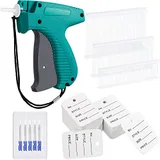
2006 Piece Clothing Price Tags Gun
The continuous-consumption case: tags go out with every item priced, so the large count is the sensible one.
$18.99 under 1¢ eachThe cost nobody puts on the invoice
A cupboard has a price per metre even when nobody bills you for it. In a school it is measured in the shelf a class set is not on. In a workshop it is the bench space a box of something you use twice a year occupies for the rest of the year.
| Pack of | At 5 a week | At 20 a week | At 100 a week |
|---|---|---|---|
| 15 pieces | 3 weeks | 1 week | 1 week |
| 100 pieces | 20 weeks | 5 weeks | 1 week |
| 2006 pieces | 401 weeks | 100 weeks | 20 weeks |
A rough way to make the cost visible: work out how long the pack will take to consume at the rate you actually use it. If the answer is longer than two years, the saving has to be large enough to be worth two years of storage, two years of the item ageing, and the risk that your needs change. Most of the time it is not.
This is the argument for buying the middle pack rather than the biggest one, and we build around that middle. The median count here is 15 pieces, and the distribution below shows how few lines sit at the extremes.
What the range itself says about pack sizes
Of 988 lines, 107 are sold singly and 98 come in counts of a hundred or more. The median pack is 15 pieces, which is a good indication of what this kind of catalogue is actually for: rooms rather than warehouses.
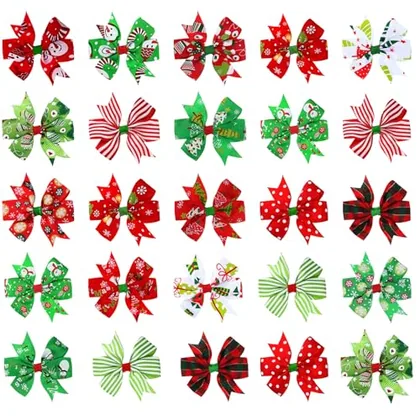
That median is worth holding on to when an outsized pack appears at a tempting price. It is not that the big packs are bad. It is that they are the exception in a range built around ordinary quantities, and an exception should have a reason behind it.
Splitting a pack between rooms
The cheapest way to get a bulk price without a bulk cupboard is to split the pack with somebody else who needs the same thing. In a school that is the other year group, in a workshop it is the person at the next bench, and in a small business the shop down the road.
Two habits make it work rather than turning into an argument. Decide the split before the box is opened, and write it on the box. A pack of 200 divided four ways is fifty each, and the moment nobody has written that down it becomes whoever gets there first.
- 1. Split before the box opensAgree who takes what while the count on the label still matches what is inside.
- 2. Write the count on the lidA pack with its number on the outside can be audited in a second three months later.
- 3. Date the shelf, not the invoiceWhat matters is when the pack landed in the cupboard, not when it was paid for.
The count on the pack is what makes the split auditable at all. It is also what tells you, three months later, whether the shared box has been raided.
What to do with the leftovers
Over-buying is not a moral failing, it is a rounding error. The useful question is what happens to the remainder.
- Metal, plastic and paper parts that do not care how long they sit: clips, hooks, tags, pegs.
- Store them by count, not by box, and the leftover becomes next term's stock.
- Anything with adhesive or rubber in it ages on the shelf whether or not a date is printed.
- A leftover here is a disposal job, so buy the count you will finish.
- Standardise. If two departments in a building buy the same item, buy one pack and split it. That is what the count is for.
- Date the box. A marker line on the carton with the month it was opened turns a mystery into a decision two years later.
- Keep consumables together. Sanding sticks, blades and glue behave the same way: they get used up. Storing them with tools you keep hides how much is left.
- Do not decant into unlabelled tubs. The count is the promise, and it disappears the moment the packaging does.
Prices move, and what we do about it
When we cannot get a line to you we take it off the shelf here until we can, because a pack count beside a price nobody will honour is worse than an empty peg. We put the date of our last update on the editorial policy page.
The per-piece figures in this guide are computed from those same prices, so they move with them. When a line has no buyable price it leaves the range rather than sitting here with a stale number, so a link from an old bookmark sometimes lands on a department page instead of a product.
Reading a bulk pack description without being misled
A few habits, learned the boring way.
- Read the count in the title and the count in the specification. Where they disagree, believe neither and move on.
- Check whether a set counts pieces or sets. "12 sets" of a two-part item is twenty-four pieces, and the per-piece figure depends entirely on which you divide by.
- Look for the size before the colour. A pack of the wrong size in the right colour is still the wrong pack.
- Treat an unstated material as unstated. Not as steel, not as plastic. If it mattered enough to ask, it matters enough to skip the line that will not say.
- Ignore the compare-at price. The only two numbers worth anything are what you pay and how many you get.
Honoson prints the first two of those as plain figures: the count is on every card, and the per-piece figure sits beside the price.
The checklist
- Divide the price by the count. Round up.
- Count the room, not the discount.
- Ask whether the item ages.
- Buy the small pack first if you have never used it.
- Check the storage cost before the price break.
- Write the opening date on the box.
None of this is clever. All of it is the difference between a cupboard that works and a cupboard full of things nobody wanted twice.
Read next
If your bulk buying is mostly tools and consumables, the companion piece is hand tools that last, and the ones meant to wear out. If it is party or classroom supplies, read small parts in a big room before the next order goes in.
Or start from the shelves: stationery and paper, party and favours, hand tools.